Showing posts with label Britian. Show all posts

Saturday, December 4, 2010

The Real Butter Beer

The second to the last Harry Potter movie came out not too long ago.  I was going to post this then, but I forgot for a while... so, without further ado:  Butter Beer

The Unofficial Harry Potter Cookbook: From Cauldron Cakes to Knickerbocker Glory--More Than 150 Magical Recipes for Muggles and WizardsIf you want more Harry Potter recipes, you can check out this book (but it's mostly made for young adults and will not contain my recipe for Butter Beer, because I didn't write the book). Also, I don't actually have this book, but it looked like it might be fun.
I started researching Butter Beer after I first read about it in the Harry Potter books.  According to Mugglenet, this is the recipe for Butter Beer:
Ingredients:
1 cup (8 oz) club soda or cream soda
½ cup (4 oz) butterscotch syrup (ice cream topping)
½ tablespoon butter

Directions:
Step 1: Measure butterscotch and butter into a 2 cup (16 oz) glass. Microwave on high for 1 to 1½ minutes, or until syrup is bubbly and butter is completely incorporated.
Step 2: Stir and cool for 30 seconds, then slowly mix in club soda. Mixture will fizz quite a bit.
Step 3: Serve in two coffee mugs or small glasses

This sounds disgusting to me.  I will admit that I haven't tried it.  But I can imagine it.  Maybe for some people it would taste good.  And that's fine, you go ahead and try it, and I'll believe you if you say you liked it.

Also, I know (from reading the Harry Potter books) that Butter Beer is supposed to "warm you up" because it has ALCOHOL.

In the UK, underage drinking does not get quite the same reaction as it does here in he US.  In much of Europe, adults will allow their children a glass of wine with dinner, it's not a big deal.  In some ways, I agree with this method, because it allows the parents to have some influence on their children's first experiences with alcohol.  And really, who would you rather have your kids learning from? You? Or their friends?  I don't have any problem with people disagreeing with me about this...

I also have no problem with people that want a non-alcoholic version because they don't drink.  That's totally fine, you just can't have my Butter Beer, and I'm sorry for that.

I enjoyed Harry Potter.  I enjoyed the books and the movies (though I did want to kill Harry in the 5th book, but I'm not going to talk about that).  Once I knew about Butter Beer, I tried to think how it would taste.  I thought about what might be in it.  But I didn't ultimately have a break through until I read this: Bacon Vodka.

Now, I know you're wondering: "How did you get a break through in making authentic Butter Beer by reading about Bacon Vodka?"  Well, I'll tell you.

At about the same time, a friend mentioned scotch and cloves in a facebook post, which gave me the idea of combining the two because the Bacon Vodka concept was still fresh in my memory.  I went to the store and bought a bottle of whiskey (cheap stuff because I am living on a tight budget).  I added spices I had in my cupboard and let it sit in a jar for several weeks.  I had vaguely forgotten about it until I remembered that Harry Potter was coming out soon and I remembered my ideas about Butter Beer.  I bought some Butterscotch Schnapps and A&W vanilla cream soda.  I added  the Butterscotch Schnapps to the spiced whiskey and then two tablespoons of my spiced butterscotchy-whiskey to a glass and poured in the cream soda.

It was everything I had ever hoped.  It was delicious.  So for the sake of humanity and all that is delicious, here is the recipe.

***

To make spiced Whiskey:
1 bottle whiskey
3-5 cinnamon sticks
20-25 whole cloves
1/4-1/2 tsp grated nutmeg (or about of quarter to a half of a whole nutmeg)
1 index finger size piece of ginger (or about 1 tsp ground ginger)

Mix the ingredients into the whiskey (I put it all in the bottle, since I wanted to make a lot of spiced whiskey).  Put in a cool dark place for several (about 6) weeks, until it gets very dark brown.  You can technically leave it for longer than six weeks.  Then strain out the sediment from the liquid.  Or you can just strain it whenever you want to make butter beer and leave the cinnamon sticks, cloves, etc until you get to the bottom of the bottle.

***
To make Butter Beer:
1-1 1/2 part Spiced Whiskey
1 1/2-2 parts Butterscotch Schnapps
2-3 Tbsp of the above mixture
1 12-oz can of Vanilla Cream soda
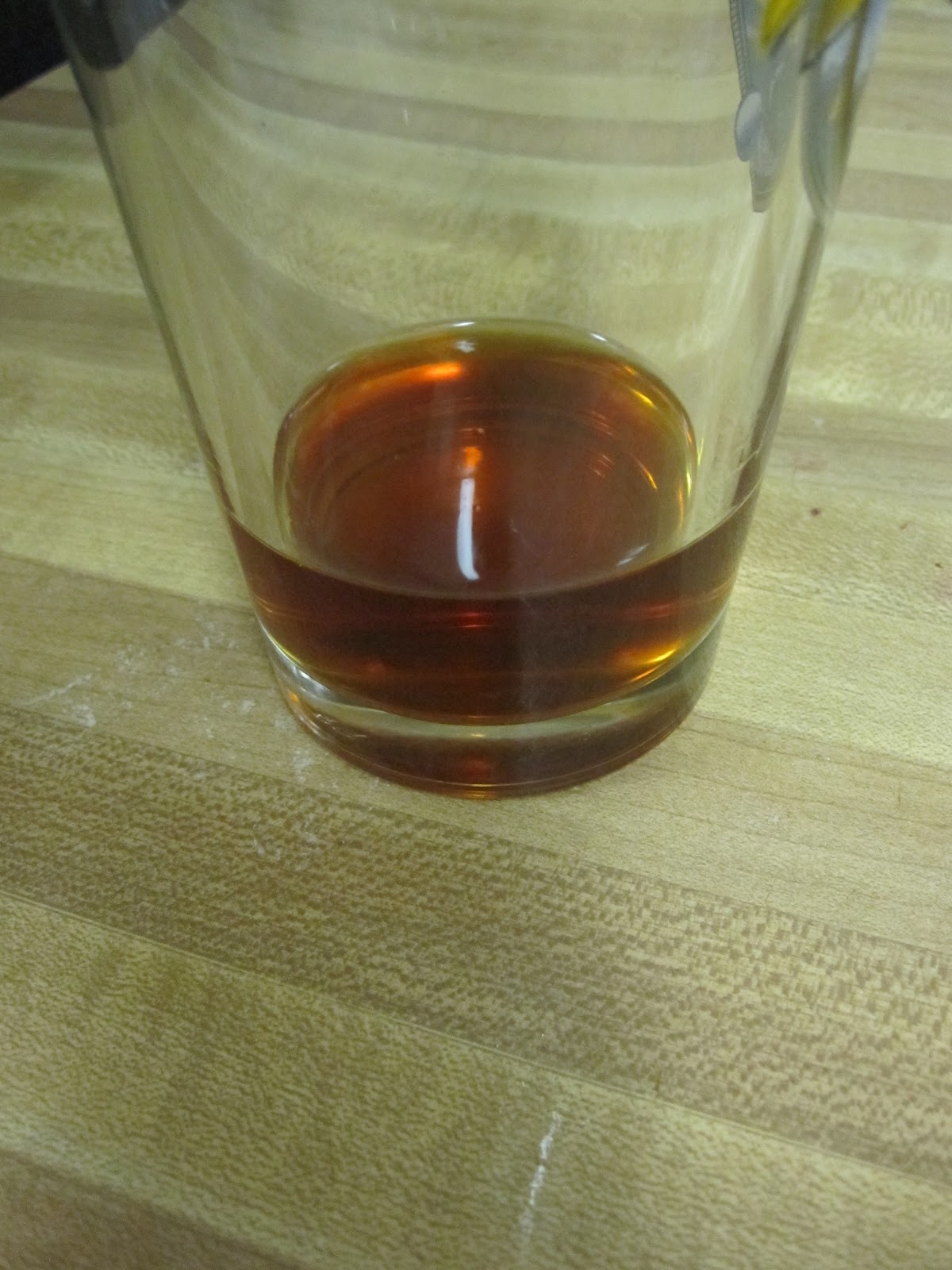

Mix the whiskey and schnapps together, then put 2-3 TBSp of that mixture in the bottom of a cup, pour in the cream soda  and mix well with a spoon.  The exact amounts are somewhat based on your individual taste.  If you like things sweeter, then more schnapps and less whiskey.  Otherwise, vice versa.  You can chill the ingredients first, or leave them at room temperature.  Also, for a creamier option, put 1 scoop of vanilla ice cream in before you add the other ingredients to the cup... it's a really delicious butter beer float!

***

Well, there you have it.  Now you can enjoy a delicious drink.  Well, as long as you are ok drinking alcohol, and want to wait several weeks to drink it.  But that's not my fault.  If you were here visiting me, you would be able to taste a delicious drink.  So it's your own fault for not visiting me, obviously.

I'll just go ahead and put it out there: If you visit me at my apartment, I will give you Butter Beer.

Friday, December 3, 2010

Beans are amazing.

Yup, that's right.  Beans are amazing.  Sometimes I forget just how amazing beans are.

Beans are one of the longest-cultivated plants.  The cultivation of beans even predates ceramics!  Beans were an important source of protein throughout Old and New World history, and still are today. There are over 4,000 cultivated varieties of bean on record in the United States alone.  Certain beans, like Kidney beans are actually toxic, but don't worry because boiling them for at least 10 minutes destroys those toxins.  Another method of destroying the toxins (and making the beans more digestible for humans) is to ferment them.

Today, let's focus on fava beans (also known as: Broad Beans, Bell Beans, Tic Beans, Butter Beans, Windsor Beans, Horse Beans, English Beans, Feve Beans, Faba Beans, Haba or Habas)  These are not to be confused with Lima beans which are sometimes also called butter beans.
  • In ancient Greece and Rome, beans were used in voting; a white bean being used to cast a yes vote, and a black bean for no.  Also, beans were used as a food for the dead, especially during festivals. 
  • In Italy, broad beans are traditionally sown on November 2, All Souls Day. Small cakes made in the shape of broad beans (though not out of them) are known as fave dei morti or "beans of the dead". According to tradition, Sicily once experienced a failure of all crops other than the beans; the beans kept the population from starvation. Some people carry a broad bean for good luck; some believe that if one carries a broad bean, one will never be without the essentials of life. 
  • In Portugal, a Christmas cake called Bolo Rei ("King cake") is baked with a fava bean inside. Whoever eats the slice containing it, is supposed to buy next year's cake.
  • European folklore also claims that planting beans on Good Friday or during the night brings good luck.
Broad beans are rich in tyramine, and should be avoided by those taking monoamine oxidase inhibitors (MAOIs).  Raw broad beans contain the alkaloids vicine, isouramil and convicine, which can induce hemolytic anemia in people with a glucose-6-phosphate dehydrogenase deficiency and can be fatal (also known as "favism").  Though, hemolysis resulting from "favism" may actually act as a protection against malaria.  Broad beans are also rich in L-dopa.  This substance is used medically in the treatment of Parkinson's disease.  It is also a natriuretic agent, which might help in controlling hypertension. 
According to the National Nutrient Database for Standard Reference, one cup of cooked fava beans contains about 187 calories, 1 g of fat, 33 g of carbohydrates and 13 g of protein.  73% of calories come from carbohydrates, 3% from fat and 24% from protein.  They have 9 g of fiber (37% of the daily value).  Fava beans are a rich source of many essential vitamins, especially B vitamins.  Fava beans also contain many essential minerals. They are a good source of manganese, copper, phosphorus, magnesium, potassium and iron.  While fava beans are a good source of protein, the protein they contain is not complete and must be paired with complementary proteins, such as those contained in grain products. 
Alright, I'm sure that's enough information for all of you to realize that beans are really awesome.  Now, on to the recipe.

Citations: Wikipedia: Bean, Vicia faba, Cook's Thesaurus: Dry Beans)

A little background:
A bit over a year ago, I went to Scotland with Opal, her mom, and Rita.  Opal's mom has a jewelry company called Billy's a Bad Kitty, and they had a booth at a Scottish art fair during the Fringe Festival.  There was a little restaurant/cafe next to the art fair.  It carried some pies that we would sometimes eat for lunch.  One of those pies was "Butter bean and Brie Pie."  It was possibly the most wonderful taste experience of my life.  Imagine yourself in an extremely old Scottish cemetery.  It's drizzling rain.  You're a bit cold, wrapped up in warm clothes, and you go into the warm restaurant and buy a single serving pie with a beautifully golden puff pastry shell.  You take it back to the booth.  You cut into the pie with your fork and take a bite.  It's magical.  Buttery crust, perfectly cooked beans, flavorful but not overbearing brie, and a slightly creamy sauce  to tie it all together.

I'm drooling just thinking about it.

Well, I came home and dreamt about that pie.  I was still going through me "I don't like baking" stage, so I let it sit there in the back of my mind... waiting for the right moment to strike.

Life happened, I was home for Thanksgiving, and among the things I was sent back to Davis with (Thank you, Mom), was a 12 oz  bag of dry fava beans.  I couldn't figure out what I was going to do with them until I looked them up online, and found out that they're also called butter beans.  And then the pie sprang into my thoughts.  I went and bought a wedge of brie and some frozen puff pastry (yes, I could have made croissant dough... but I was feeling lazy).  I had all the other ingredients at home.  And so it began.

***

This is the description from Simple Simon's website:
butter beans are casseroled in a vegetable and white wine stock with a good dose of garlic and finished with parsley, cream and lemon juice. Brie is then added to the cooled ingredients prior to baking.

This is what I ended up with (measurements are approximate):

1lb Butter Beans (if you're starting with dried fava beans you'll have to soak them overnight, then blanch them in boiling water for 10min, then cool them and take off the outer shell/thick husk before you boil them with the other ingredients)
2 cups Vegetable stock (chicken broth also works)
3 dashes White wine (I had sherry, and I wasn't going to go buy a bottle of wine just for 1 recipe)
5 cloves Garlic, minced
1/4 large onion, chopped and sauted
1 tsp Parsley
1/4 cup Cream (or 1/2&1/2)
1 Tbsp Lemon Juice
1 largish wedge of Brie cut into chunks


Cook beans in broth, wine and garlic until tender.  Stir in sauteed onion, parsley, cream and lemon juice into Butter bean mixture, let cool.

Preheat oven to 400.  Place puff pastry into a muffin pan (I wanted to make small pies) and spoon mixture in puff pastry shells, cover with more pastry, making sure the pies are sealed around the edges (use water or egg, according to puff pastry directions), bake about 10-15min until golden brown.  (For my pies, I ended up taking the pies out of the muffin pan and flipped them over onto a baking sheet and baked them another 5-10min so the bottoms were also browned and puffy).

***

I know it's cheating, but I really would recommend the Trader Joe's Frozen Puff Pastry... they worked very nicely.  The Husband even commented on how much he liked the pastry shells.

I know I'm going to end up making these again, because they are SO delicious.  Probably for a party this Christmas season.

The Husband is working on getting his finals done for school, so who knows when I'll post next, but I am hoping that I'll have more things to post over the winter break.  For now, I'll leave you with this:

Wednesday, November 10, 2010

Preparations of Duck throughout the years

A friend requested that I find any old recipes I had for duck, so let's talk about duck.

Wild ducks have been hunted for food, down, and feathers worldwide since prehistoric times.  In America during the 1800's, there became a thriving commercial waterfowl hunting industry because of the need for food and the vast supply of birds.  Currently, most ducks used for consumption are farm raised rather than wild.

Ducks have been farmed for thousands of years; most likely farming started in Southeast Asia. They are farmed for their meat, eggs, and down. A minority of ducks are also kept for foie gras production. Their eggs are blue-green to white depending on the breed.

Ducks are more expensive and less popular than chickens because they have less lean white meat and are more difficult to keep confined than chickens are. Duck appears less frequently in the mass market food industry and lower priced restaurants and stores because of it's higher price tag.  Duck is generally only popular in "haute cuisine." 

(citations: Wikipedia: Duck, Mallard, Domestic Duck)

I will now include the recipes I have found for Duck, plus a traditional meal plan and those other recipes as well.  At some point, I'm going to give some really awesome traditional dinner parties, so I can use all of these delicious sounding recipes, and post about them as well.

Seven Centuries of English Cooking: A Collection of RecipesIf you are at all interested in what cooking was like during and before the 1920's, you should check out  Seven Centuries of English Cooking: A Collection of Recipes by Maxime de la Falaise.  It's awesome, and has all kinds of interesting historical foods! 

***
A Mallard, Smothered; from Seven Centuries of English Cooking, Gervase Markham, 1660:
A 3 pound Mallard or wild duck
2 Tbsp flour
2 Tbsp oil
1/2 cup chopped onion
1 cup stock
1 cup white wine
1/2 cup chopped mixed herbs
1/2 cup currants
1/2 cup chopped dates
2 Tbsp butter
2 Tbsp sugar
1 tsp powdered cinnamon
2 Tbsp wine vinegar or 1/2 cup gooseberries (or cranberries)
2 slices of toast, cut in sippets (A small piece of toast or bread soaked in gravy or other liquid or used as a garnish).

Dust the duck with flour and brown it in oil; brown the onions in the same oil. Braise the duck in the same pan and add the stock, wine and herbs. Simmer for about 1 hour; then add the currants and dates and simmer for another 30min or until the duck is tender.  Remove the bird and keep it warm.  Add the butter, sugar, cinnamon, wine vinegar or gooseberries, reduce the sauce and pour over the bird in a dish garnished with sippets.
***
Duck with Horseradish; from Seven Centuries of English Cooking, Charles Carter, 1732:
A 4-4 1/2 pound duck
2 Tbsp flour
2 Tbsp butter
2 1/2 cups chicken stock
1 cup grated Horseradish.
Garnish:
Freshly grated Horseradish
1 sliced lemon

Dust the duck with flour and brown it in the butter on all sides. Add the chicken stock and grated horseradish and simmer gently until the duck is tender.  Remove the duck and carve it.  Arrange the pieces on a warm serving dish, then skim the fat from the surface of the sauce and pour the sauce over the bird. Arrange the fresh horseradish at each end of the dish and the sliced lemon around the edges.

***
To Stuff and roast a Turkey, or Fowl; from The First American Cookbook, 1796:
One pound soft wheat bread
3 ounces beef suet
3 eggs
a little sweet thyme
sweet marjoram
pepper and salt
and some add a gill (1/2 cup) wine

fill the bird therewith and sew up, hang down to a steady solid fire, basting frequently with salt and water, and roast until a steam emits from the breast, put one third of a pound of butter into the gravy, dust flour over the bird and baste with the gravy; serve up with boiled onions and cranberry-sauce, mangoes (a name sometimes given to the cantaloupe; and often attributed to any vegetable or fruit: melon, squash, green pepper, etc. that can be stuffed and pickled), pickles or celery.
2. Others omit the sweet herbs, and add parsley done with potatoes.
3. Boil and mash 3 pints potatoes, wet them with butter, add sweet herbs, pepper, salt, fill and roast as above.
 ***
To Stuff and Roast a Goslin; from The First American Cookbook, 1796:
Boil the inwards tender, chop them fine, put double quantity of grated bread, 4 ounces butter, pepper and salt, (sweet herbs if you like; sweet thyme, marjoram) 2 eggs moulded into the stuffing, parboil 4 onions and chop them into the stuffing, add wine, and roast the bird.  This is a good stuffing for every kind of Water Fowl, which requires onion sauce (or gravy cooked with onions).

***
1896 Boston Cooking-School CookbookThis one is also a great guide to historical (and modern) cooking.  It has everything!

Roast Duck Dinner Menu; from The 1896 Boston Cooking-School Cook Book:
Cream of Lima Bean Soup
Roast Duck
Mashed Sweet Potatoes
Cauliflower au Gratin
Rice Croquettes with Currant Jelly
Grapes, Pears, Crackers, Cheese, and Cafe Noir.

Cream of Lima Bean Soup
1 cup dried lima beans
3 pints cold water
2 slices onion
4 slices carrot
1 cup cream or milk
4 Tbsp butter
2 Tbsp flour
1 tsp salt
1/2 tsp pepper

Soak the beans overnight; in the morning drain and add cold water; cook until soft, and rub through a sieve. Cut vegetables in small cubes, and cook five minutes in half the butter; remove vegetables, add flour, salt, and pepper, and stir into boiling soup.  Add cream, reheat, strain, and add remaining butter in small pieces.

Roast Duck
Dress and clean a wild duck and truss. Place on rack in dripping-pan, sprinkle with salt and pepper, and cover breast with two very thin slices fat salt pork. Bake twenty to thirty minutes in a very hot oven, basting every five minutes with fat in pan; cut string and remove string and skewers.
Serve with Orange or Olive Sauce. Currant jelly should accompany a duck course. Domestic ducks should always be well cooked, requiring little more than twice the time allowed for wild ducks.
Ducks are sometimes stuffed with apples, pared, cored, and cut in quarters, or three small onions may be put in the body of duck to improve flavor.  Neither apples nor onions are to be served.

Olive Sauce: Remove stones from 10 olives, leaving meat in one piece. Cover with boiling water and cook five minutes.  Drain olives, add 2 cups Brown Sauce*.

Orange Sauce:
1/4 cup butter
1/4 cup flour
1 1/3 cups Brown Stock*
1/2 tsp salt
Juice from 2 Oranges
2 Tbsp sherry wine
Rind of 1 orange cut in fancy shapes
dash of cayenne

Brown the butter, add flour, with salt and cayenne, and stir until well browned. Add stock gradually, and just before serving, orange juice, sherry, and pieces of rind.

*Brown Sauce: 2 Tbsp butter, 1/2 slice onion, 2 1/2 Tbsp flour, 1 cup Brown Stock, 1/4 tsp salt, 1/8 tsp pepper.  Cook onion in butter until slightly browned; remove onion and stir butter constantly until well browned; add flour mixed with seasonings, and brown the butter and flour then add stock gradually.

*Brown Stock: marrow bones, beef, poultry carcasses, carrots, turnips, leeks, celery, parsnips and onion. Simmered and skimmed for several hours producing a dark brown liquid.

Mashed Sweet Potatoes
To 2 cups boiled & riced or mashed sweet potatoes add three Tbsp butter, 1/2 tsp salt, and hot milk to moisten. Beat until light, and pile on a vegetable dish.

Cauliflower au Gratin
Place whole cooked cauliflower (or cut for easier serving) on a dish for serving, cover with buttered crumbs, and place on oven grate to brown crumbs; remove from oven and pour one cup Thin White Sauce around cauliflower.
Thin White Sauce:
2 Tbsp butter
1 cup scalded milk
1 1/2 Tbsp flour
1/4 tsp salt
dash of pepper
Melt butter in saucepan, add flour mixed with seasonings, stir until thoroughly blended. Gradually pour in milk, stirring until well mixed, then beating until smooth and glossy.

Rice Croquettes with Currant Jelly
1/2 cup rice
1/2 cup boiling water
1 cup scalded milk
1/2 tsp salt
2 egg yolks
1 Tbsp butter

Wash rice, add to water with salt, cover and steam until rice has absorbed all the water. Then add milk, stir lightly with a fork, cover and steam until rice is soft. Remove from heat, add egg yolks and butter; spread on shallow plate to cool. Shape into balls, roll in breadcrumbs, then shape in form of nests. Dip in egg, again in crumbs, deep fry until golden and drain. Put a cube of currant jelly in each croquette. Garnish with parsley.

***
Sounds good, doesn't it?  I may have to go out and get myself a duck to try at least one of these preparations. In the mean time, I think I'm going to have to try those Rice Croquettes, and probably the cauliflower au gratin.  I'll let you know how they turn out!

(If you have any questions, suggestions or recommendations for recipes... Please feel free to comment on any posts, or send me an email: thelazywife@gmail.com)

Monday, September 27, 2010

Cranberry Cream Scones

"The scone is a small British quick bread (or cake if recipe includes sugar) of Scottish origin. Scones are especially popular in the United Kingdom, Canada, Australia, New Zealand, and Ireland, but are eaten in many other countries. They are usually made of wheat, barley or oatmeal, with baking powder as a leavening agent. The scone is a basic component of the cream tea or Devonshire tea." - Wikipedia

I have always been fascinated by Great Britain.  I love the literature, the climate, the costume dramas... and, of course, the food.  While British food, in general, might be a little on the bland side, they definitely know how to make buttery, delicious breads.  Though, I do have to note, that a lot of the good British things came from Scotland.

Today, I'm making scones.  But not just any scones.  Cranberry Cream Scones.

***

Cranberry Cream Scones (from Alton Brown)

2 cups all-purpose flour (I made these with 1.5 cups all-purpose flour and 1/2 cup whole wheat flour)
4 teaspoons baking powder
3/4 teaspoons salt
1/3 cup sugar
4 Tablespoons butter
2 Tablespoons shortening
3/4 cup cream
1 egg
1/4 cup dried cranberries

Preheat oven to 375 degrees.

Cut butter into small cubes and chill.  In a medium bowl, mix the flour, baking powder, salt and sugar.  Add chilled butter and shortening, mix until it looks like mealy. I use a pastry blender, but you can also squeeze the butter into the flour with your fingers.

In a separate bowl (I use a measuring cup) mix the cream and egg (beat them together), then add to the flour mixture and stir in the fruit.  Turn the dough onto a floured surface.  Gently knead once or twice to make sure the cranberries are evenly distributed.  Roll out to about 1/2inch thick and cut into biscuit sized rounds.  You can make them pretty much any shape, they puff up the best if they have a cut edge rather than just spooning them down.

Bake for 15min until golden brown and delicious.

***

These delicious scones go amazingly well with clotted cream and honey.  They are a perfect match with tea.  And I have made them with about 2 Tablespoons of chopped up candied ginger and they're awesome.  I used the same recipe to make plain scones (leave out the cranberries) and cheese, chive & garlic scones - I kept the sugar in, but you could leave it out to make them more savory.

At some point in the near future, I will probably try making them with protein powder, since I have been trying to figure out some way of taking protein after workouts that doesn't involve chugging a shake.

(citations: Wikipedia, Alton Brown via Food Network)