A friend requested that I find any old recipes I had for duck, so let's talk about duck.
Wild ducks have been hunted for food, down, and feathers worldwide since prehistoric times. In America during the 1800's, there became a thriving commercial waterfowl hunting industry because of the need for food and the vast supply of birds. Currently, most ducks used for consumption are farm raised rather than wild.
Ducks have been farmed for thousands of years; most likely farming started in Southeast Asia. They are farmed for their meat, eggs, and down. A minority of ducks are also kept for foie gras production. Their eggs are blue-green to white depending on the breed.
Ducks are more expensive and less popular than chickens because they have less lean white meat and are more difficult to keep confined than chickens are. Duck appears less frequently in the mass market food industry and lower priced restaurants and stores because of it's higher price tag. Duck is generally only popular in "haute cuisine."
(citations: Wikipedia:
Duck,
Mallard,
Domestic Duck)
I will now include the recipes I have found for Duck, plus a traditional meal plan and those other recipes as well. At some point, I'm going to give some really awesome traditional dinner parties, so I can use all of these delicious sounding recipes, and post about them as well.
A Mallard, Smothered; from
Seven Centuries of English Cooking
, Gervase Markham, 1660:
A 3 pound Mallard or wild duck
2 Tbsp flour
2 Tbsp oil
1/2 cup chopped onion
1 cup stock
1 cup white wine
1/2 cup chopped mixed herbs
1/2 cup currants
1/2 cup chopped dates
2 Tbsp butter
2 Tbsp sugar
1 tsp powdered cinnamon
2 Tbsp wine vinegar or 1/2 cup gooseberries (or cranberries)
2 slices of toast, cut in sippets (A small piece of toast or bread soaked in gravy or other liquid or used as a garnish).
Dust the duck with flour and brown it in oil; brown the onions in the same oil. Braise the duck in the same pan and add the stock, wine and herbs. Simmer for about 1 hour; then add the currants and dates and simmer for another 30min or until the duck is tender. Remove the bird and keep it warm. Add the butter, sugar, cinnamon, wine vinegar or gooseberries, reduce the sauce and pour over the bird in a dish garnished with sippets.
***
Duck with Horseradish; from
Seven Centuries of English Cooking, Charles Carter, 1732:
A 4-4 1/2 pound duck
2 Tbsp flour
2 Tbsp butter
2 1/2 cups chicken stock
1 cup grated Horseradish.
Garnish:
Freshly grated Horseradish
1 sliced lemon
Dust the duck with flour and brown it in the butter on all sides. Add the chicken stock and grated horseradish and simmer gently until the duck is tender. Remove the duck and carve it. Arrange the pieces on a warm serving dish, then skim the fat from the surface of the sauce and pour the sauce over the bird. Arrange the fresh horseradish at each end of the dish and the sliced lemon around the edges.
***
To Stuff and roast a Turkey, or Fowl; from
The First American Cookbook
, 1796:
One pound soft wheat bread
3 ounces beef suet
3 eggs
a little sweet thyme
sweet marjoram
pepper and salt
and some add a gill (1/2 cup) wine
fill the bird therewith and sew up, hang down to a steady solid fire, basting frequently with salt and water, and roast until a steam emits from the breast, put one third of a pound of butter into the gravy, dust flour over the bird and baste with the gravy; serve up with boiled onions and cranberry-sauce, mangoes (a name sometimes given to the cantaloupe; and often attributed to any vegetable or fruit: melon, squash, green pepper, etc. that can be stuffed and pickled), pickles or celery.
2. Others omit the sweet herbs, and add parsley done with potatoes.
3. Boil and mash 3 pints potatoes, wet them with butter, add sweet herbs, pepper, salt, fill and roast as above.
***
To Stuff and Roast a Goslin; from
The First American Cookbook, 1796:
Boil the inwards tender, chop them fine, put double quantity of grated bread, 4 ounces butter, pepper and salt, (sweet herbs if you like; sweet thyme, marjoram) 2 eggs moulded into the stuffing, parboil 4 onions and chop them into the stuffing, add wine, and roast the bird. This is a good stuffing for every kind of Water Fowl, which requires onion sauce (or gravy cooked with onions).
***


This one is also a great guide to historical (and modern) cooking. It has everything!
Roast Duck Dinner Menu; from
The 1896 Boston Cooking-School Cook Book
:
Cream of Lima Bean Soup
Roast Duck
Mashed Sweet Potatoes
Cauliflower au Gratin
Rice Croquettes with Currant Jelly
Grapes, Pears, Crackers, Cheese, and Cafe Noir.
Cream of Lima Bean Soup
1 cup dried lima beans
3 pints cold water
2 slices onion
4 slices carrot
1 cup cream or milk
4 Tbsp butter
2 Tbsp flour
1 tsp salt
1/2 tsp pepper
Soak the beans overnight; in the morning drain and add cold water; cook until soft, and rub through a sieve. Cut vegetables in small cubes, and cook five minutes in half the butter; remove vegetables, add flour, salt, and pepper, and stir into boiling soup. Add cream, reheat, strain, and add remaining butter in small pieces.
Roast Duck
Dress and clean a wild duck and truss. Place on rack in dripping-pan, sprinkle with salt and pepper, and cover breast with two very thin slices fat salt pork. Bake twenty to thirty minutes in a very hot oven, basting every five minutes with fat in pan; cut string and remove string and skewers.
Serve with Orange or Olive Sauce. Currant jelly should accompany a duck course. Domestic ducks should always be well cooked, requiring little more than twice the time allowed for wild ducks.
Ducks are sometimes stuffed with apples, pared, cored, and cut in quarters, or three small onions may be put in the body of duck to improve flavor. Neither apples nor onions are to be served.
Olive Sauce: Remove stones from 10 olives, leaving meat in one piece. Cover with boiling water and cook five minutes. Drain olives, add 2 cups Brown Sauce*.
Orange Sauce:
1/4 cup butter
1/4 cup flour
1 1/3 cups Brown Stock*
1/2 tsp salt
Juice from 2 Oranges
2 Tbsp sherry wine
Rind of 1 orange cut in fancy shapes
dash of cayenne
Brown the butter, add flour, with salt and cayenne, and stir until well browned. Add stock gradually, and just before serving, orange juice, sherry, and pieces of rind.
*Brown Sauce: 2 Tbsp butter, 1/2 slice onion, 2 1/2 Tbsp flour, 1 cup Brown Stock, 1/4 tsp salt, 1/8 tsp pepper. Cook onion in butter until slightly browned; remove onion and stir butter constantly until well browned; add flour mixed with seasonings, and brown the butter and flour then add stock gradually.
*Brown Stock: marrow bones, beef, poultry carcasses, carrots, turnips, leeks, celery, parsnips and onion. Simmered and skimmed for several hours producing a dark brown liquid.
Mashed Sweet Potatoes
To 2 cups boiled & riced or mashed sweet potatoes add three Tbsp butter, 1/2 tsp salt, and hot milk to moisten. Beat until light, and pile on a vegetable dish.
Cauliflower au Gratin
Place whole cooked cauliflower (or cut for easier serving) on a dish for serving, cover with buttered crumbs, and place on oven grate to brown crumbs; remove from oven and pour one cup Thin White Sauce around cauliflower.
Thin White Sauce:
2 Tbsp butter
1 cup scalded milk
1 1/2 Tbsp flour
1/4 tsp salt
dash of pepper
Melt butter in saucepan, add flour mixed with seasonings, stir until thoroughly blended. Gradually pour in milk, stirring until well mixed, then beating until smooth and glossy.
Rice Croquettes with Currant Jelly
1/2 cup rice
1/2 cup boiling water
1 cup scalded milk
1/2 tsp salt
2 egg yolks
1 Tbsp butter
Wash rice, add to water with salt, cover and steam until rice has absorbed all the water. Then add milk, stir lightly with a fork, cover and steam until rice is soft. Remove from heat, add egg yolks and butter; spread on shallow plate to cool. Shape into balls, roll in breadcrumbs, then shape in form of nests. Dip in egg, again in crumbs, deep fry until golden and drain. Put a cube of currant jelly in each croquette. Garnish with parsley.
***
Sounds good, doesn't it? I may have to go out and get myself a duck to try at least one of these preparations. In the mean time, I think I'm going to have to try those Rice Croquettes, and probably the cauliflower au gratin. I'll let you know how they turn out!
(If you have any questions, suggestions or recommendations for recipes... Please feel free to comment on any posts, or send me an email:
thelazywife@gmail.com)


 and Jane Austen
 Novels adapted for radio. Within those stories, I heard how frugal people would pick fruit from the trees and preserve it for the winter months when fresh fruit was hard to find. While considering this, I was walking to pick up the mail from our box at our apartment and I began to wonder what kind of fruit trees were in our complex.
 I picked one of the globular pinkish fruits and a couple leaves and took them back to my apartment. I searched on the internet to find a description that matched the fruit I had found.
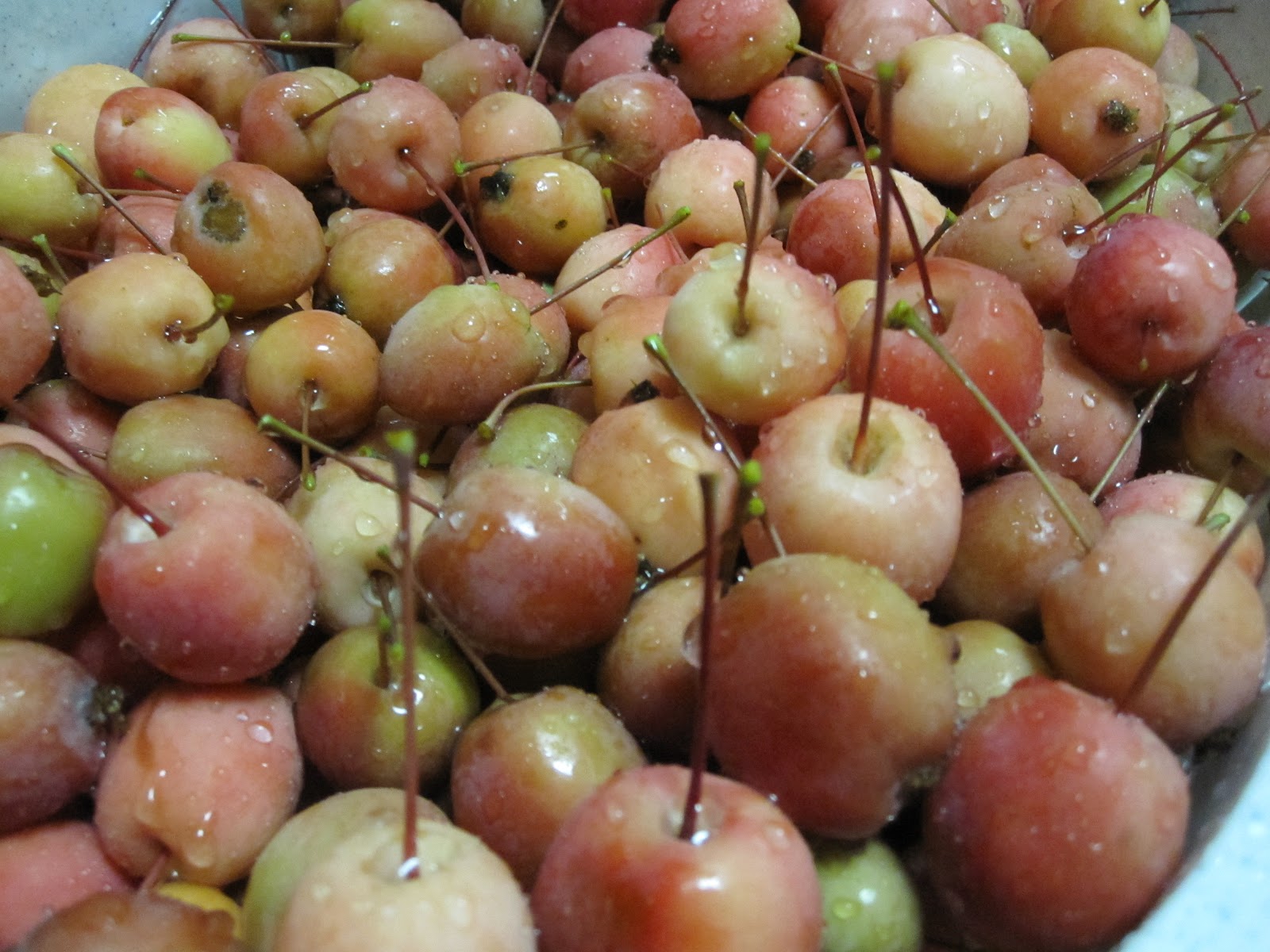 I discovered that apples are the only fruit with seeds in a star pattern. They are related to roses and also have serrated leaves. I compared my samples with the descriptions and discovered that I had several crab apple trees in perfect readiness for harvest. Crab apples do have an apple-like taste and smell, but are generally a more tart.


